
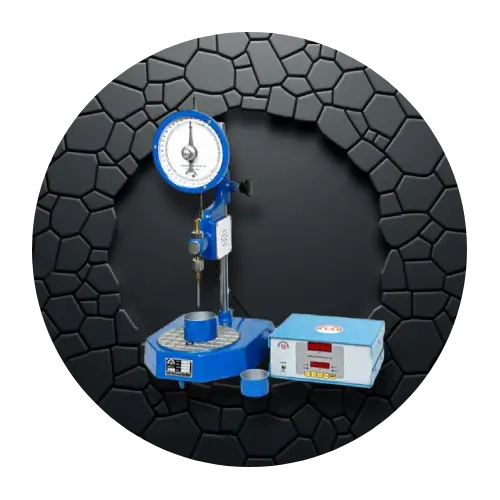
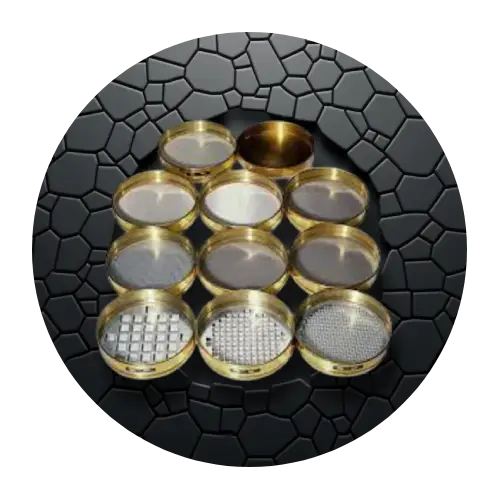
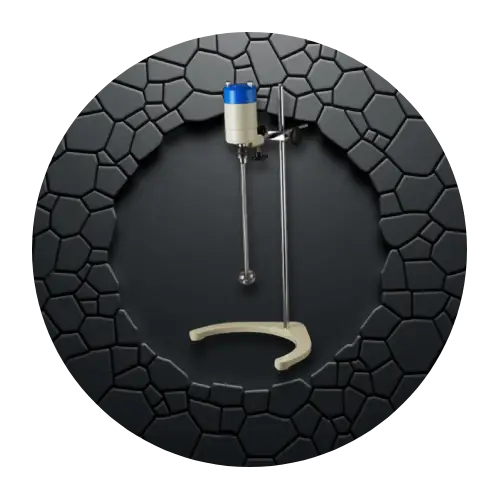

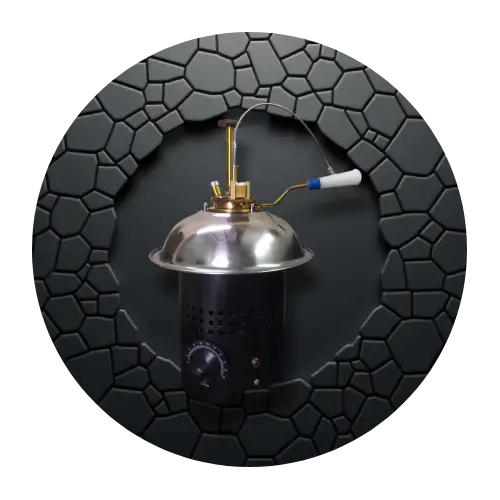

Concrete is the backbone of modern infrastructure. From residential buildings and commercial complexes to highways, bridges, and dams, almost every construction project relies on concrete for structural stability and durability. However, the performance of concrete depends heavily on proper testing and quality control.
Modern civil laboratories play a crucial role in ensuring that concrete meets required strength, durability, and safety standards. To achieve this, they use a wide range of concrete test equipment designed to evaluate both fresh and hardened concrete properties.
In this comprehensive guide, we will explore the various types of concrete test equipment used in modern civil laboratories and understand their applications, benefits, and importance in construction projects.
Importance of Concrete Testing in Civil Laboratories
Concrete testing ensures:
- Structural safety
- Compliance with national and international standards
- Consistent material quality
- Long-term durability
- Reduced risk of structural failure
Civil laboratories conduct systematic tests on concrete samples to evaluate performance before, during, and after construction. Without proper testing, construction projects risk defects, cracks, and premature failures.
Fresh Concrete Testing Equipment
Fresh concrete testing is performed immediately after mixing and before placement. These tests assess workability, consistency, and air content.
Slump Test Apparatus
The slump test is the most commonly used method to measure workability of fresh concrete.
Purpose:
- Determine consistency
- Check water-cement ratio accuracy
- Ensure proper mix design
If slump values are too high or too low, adjustments can be made before pouring, preventing segregation or honeycombing.
Compaction Factor Apparatus
This equipment measures the degree of compaction achieved by a standard amount of work.
Used for:
- Low workability concrete
- Road and pavement construction
- Mass concrete works
It provides more accurate results than slump tests for stiff mixes.
Vee-Bee Consistometer
The Vee-Bee test is used for very dry or stiff concrete mixes.
Applications:
- Roller compacted concrete
- Pavements
- Industrial flooring
It measures the time required for concrete to change shape under vibration.
Flow Table Test Apparatus
This test determines the flowability of highly workable concrete.
Commonly used for:
- Self-compacting concrete
- High-performance concrete
Air Content Meter
Air entrainment significantly affects durability and freeze-thaw resistance.
The air content meter measures the amount of air in fresh concrete to ensure proper durability performance.
Hardened Concrete Testing Equipment
After curing, concrete must be tested for strength and structural integrity.
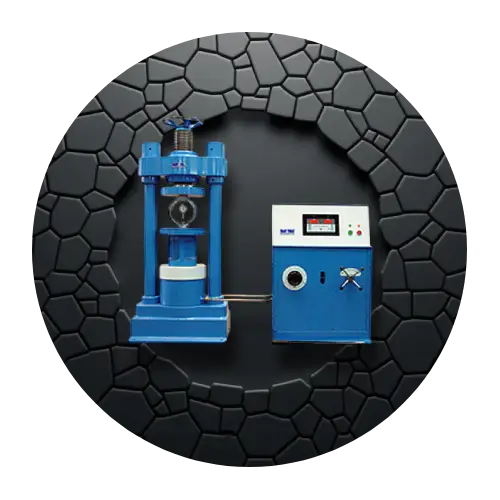
Compression Testing Machine (CTM)
The Compression Testing Machine (CTM) is one of the most important pieces of equipment in civil laboratories.
Purpose:
- Measure compressive strength of concrete cubes and cylinders
- Verify design strength compliance
It is mandatory for quality control in almost every construction project.
Flexural Testing Machine
This equipment measures the flexural strength (bending strength) of concrete beams.
Applications:
- Road construction
- Pavements
- Industrial floors
Flexural strength is critical in structures subjected to bending loads.
Split Tensile Strength Testing Machine
Concrete is weak in tension. This test measures tensile strength using cylindrical samples.
Importance:
- Helps assess cracking resistance
- Useful in pavement and slab design
Rebound Hammer (Schmidt Hammer)
The rebound hammer is a non-destructive testing (NDT) tool.
Used for:
- Estimating surface hardness
- Assessing in-situ compressive strength
- Evaluating existing structures
It is portable and widely used in field inspections.
Ultrasonic Pulse Velocity (UPV) Tester
The UPV tester detects internal flaws without damaging the structure.
Identifies:
- Cracks
- Voids
- Honeycombing
- Internal defects
It is commonly used in bridges, dams, and old building assessments.
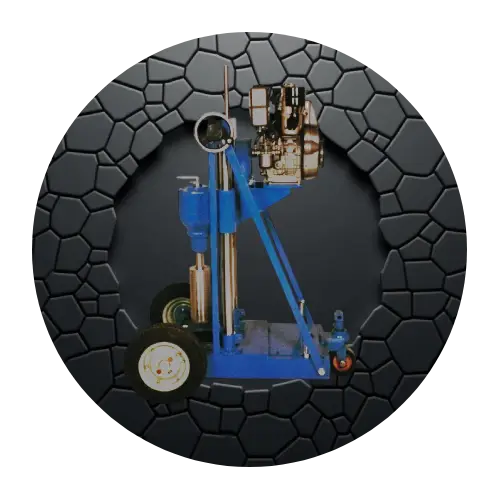
Core Cutting Machine
When in-situ strength verification is required, core samples are extracted from hardened concrete using a core cutting machine.
These samples are then tested in a compression testing machine for accurate strength evaluation.
Durability Testing Equipment
Durability determines how well concrete withstands environmental exposure.
Rapid Chloride Penetration Test (RCPT) Apparatus
Measures resistance to chloride ion penetration.
Important for:
- Marine structures
- Coastal buildings
- Bridges
Water Permeability Test Apparatus
Determines resistance to water penetration under pressure.
Used in:
- Water tanks
- Dams
- Basements
Carbonation Test Equipment
Measures depth of carbonation which can lead to steel reinforcement corrosion.
Sulphate Resistance Testing Equipment
Assesses resistance against chemical attack in aggressive soil conditions.
Curing and Sample Preparation Equipment
Proper curing is essential for accurate strength results.
Curing Tank
Maintains standard temperature and humidity for curing concrete cubes.
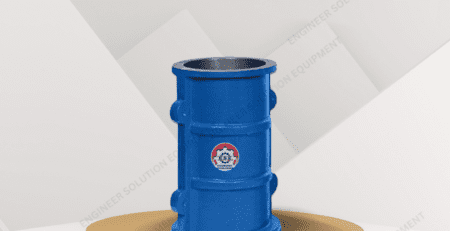
Cube Molds & Cylinder Molds
Used for casting test specimens.
Available in:
- 150mm cube molds
- 100mm cube molds
- Cylinder molds
Vibration Table
Removes air voids during specimen preparation.
Ensures:
- Uniform compaction
- Accurate strength results
Advanced Digital & Automated Equipment
Modern civil laboratories are adopting advanced technologies.
Digital Compression Testing Machines
- Automatic data recording
- Digital display
- Higher accuracy
- Reduced human error
Data Logging & Software Integration
Modern labs use software systems to:
- Store test results
- Generate reports
- Maintain compliance records
- Improve traceability
Portable NDT Devices
Handheld UPV testers and rebound hammers are now widely used for on-site testing.
They allow real-time structural assessment without waiting for lab results.
Specialized Concrete Testing Equipment
Shrinkage & Creep Testing Equipment
Used in research labs to study long-term deformation.
Thermal Conductivity Testing Equipment
Used for evaluating thermal performance of concrete.
Fire Resistance Testing Equipment
Assesses performance under high temperatures.
Why Modern Civil Laboratories Need Comprehensive Equipment
Modern construction demands:
- High-rise buildings
- Mega infrastructure projects
- Smart cities
- Sustainable structures
These projects require precise, reliable, and fast testing methods.
Comprehensive equipment ensures:
- Accurate results
- Faster project approvals
- Compliance with standards
- Reduced construction risks
Benefits of Using Advanced Concrete Test Equipment
- Improved Accuracy
- Enhanced Quality Control
- Reduced Human Error
- Faster Testing Processes
- Better Documentation
- Increased Structural Safety
- Long-Term Cost Savings
Role of Authorized Equipment Suppliers
Reliable suppliers provide:
- Certified and calibrated equipment
- Warranty support
- After-sales service
- Installation and training
- Periodic maintenance
Choosing the right supplier ensures consistent performance and long equipment life.
Future Trends in Concrete Testing Laboratories
The future of concrete testing includes:
- AI-based strength prediction
- IoT-enabled monitoring systems
- Automated sample handling
- Smart sensors embedded in concrete
- Remote data monitoring
Technology is making testing more efficient and reliable.
Conclusion
Concrete testing is a fundamental aspect of modern construction and civil engineering. Civil laboratories use a wide range of equipment to evaluate workability, strength, durability, and structural integrity.
From slump test apparatus and compression testing machines to advanced ultrasonic pulse velocity testers and digital automation systems, each piece of equipment plays a crucial role in ensuring construction quality.
As infrastructure projects become more complex and safety standards become stricter, the importance of modern concrete test equipment continues to grow.