
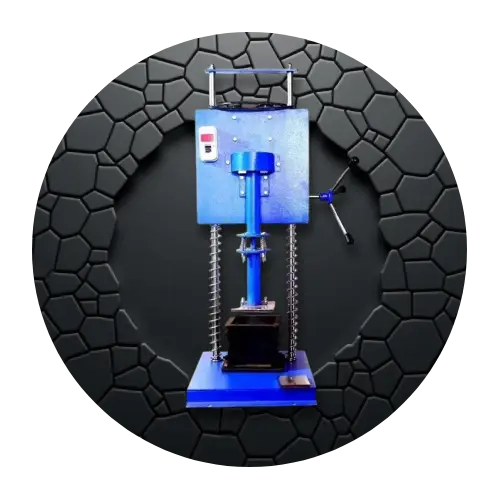
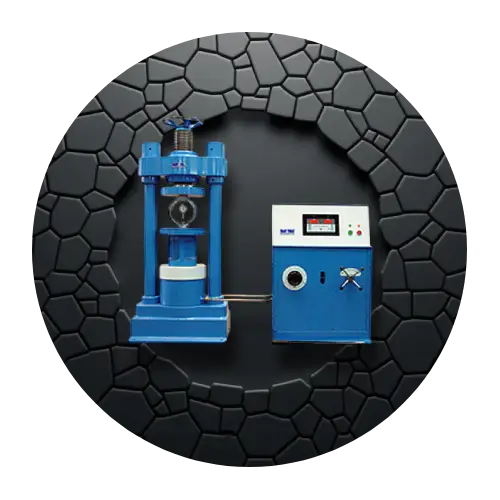
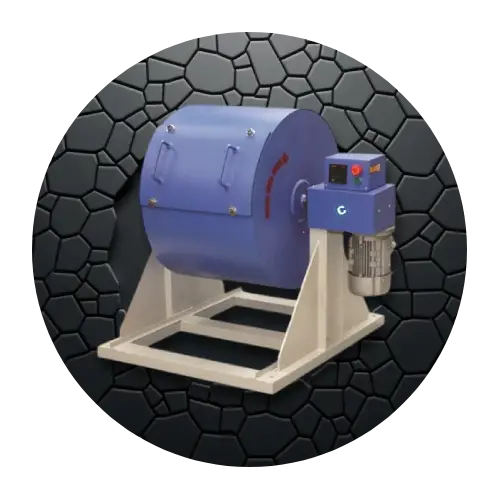
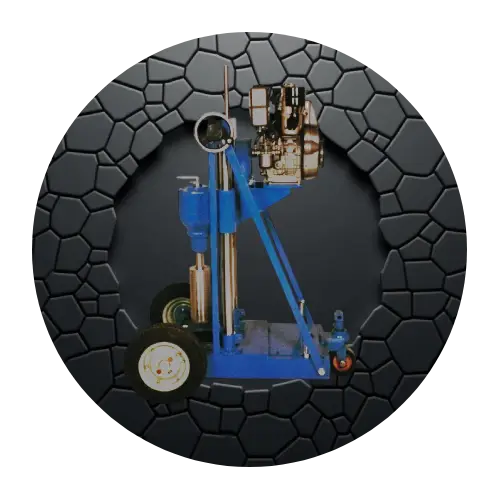

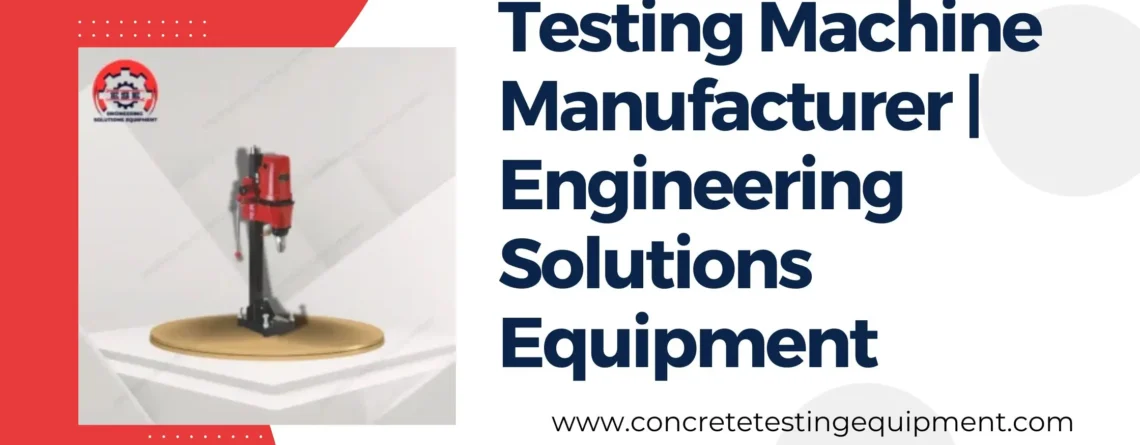
Accurate material testing is critical in construction, manufacturing, and engineering industries to ensure safety, quality, and compliance. Among the various testing tools, compression testing machines play a pivotal role in measuring the compressive strength of materials such as concrete, metals, bricks, and polymers.
Engineering Solutions Equipment is a trusted manufacturer of compression testing machines, providing reliable, precise, and durable testing solutions for laboratories, construction companies, and industrial clients. This blog explores the benefits, types, applications, and why partnering with a reputable manufacturer is essential.
What Is a Compression Testing Machine?
A compression testing machine (CTM) is a mechanical or hydraulic device used to determine the compressive strength of materials. Compressive strength is the capacity of a material to withstand axial loads without failure.
Key Features of Compression Testing Machines:
- High Precision Load Measurement – Ensures accurate testing results.
- Versatility – Can test concrete cubes, metal rods, bricks, cement, polymers, and more.
- User-Friendly Design – Digital displays, automated controls, and easy sample placement.
- Robust Construction – Long-lasting machine structure to endure repeated testing.
Importance of Compression Testing
Compression testing is essential to:
- Evaluate material strength and performance under load.
- Ensure compliance with industry standards such as ASTM, IS, or BS.
- Determine suitability of materials for construction, infrastructure, and industrial applications.
- Improve safety and quality control during production and construction.
Types of Compression Testing Machines
Manual Compression Testing Machines
- Operated mechanically with hand cranks or screws.
- Suitable for small-scale laboratories or educational institutes.
- Offers cost-effective testing for low-volume materials.
Hydraulic Compression Testing Machines
- Uses hydraulic pressure for higher load applications.
- Ideal for testing concrete cubes, beams, bricks, and metal specimens.
- Provides smooth, precise loading with digital readouts.
Digital Compression Testing Machines
- Equipped with advanced load cells, microprocessors, and digital displays.
- Offers automated data recording, analysis, and reporting.
- Enhances accuracy, reduces human error, and improves productivity in high-volume labs.
Servo-Controlled Compression Testing Machines
- Provides precise control over load application speed.
- Suitable for research labs and industrial R&D testing.
- Supports advanced testing like stress-strain analysis and material characterization.
Benefits of Using Compression Testing Machines from Engineering Solutions Equipment
Precision and Accuracy
Engineering Solutions Equipment manufactures machines with high-precision load cells and calibration mechanisms, ensuring consistent and accurate compressive strength measurement for all types of materials.
Durability and Robust Construction
Their machines are built with high-quality steel frames, hydraulic components, and protective coatings, ensuring long service life and reliable performance under repeated testing cycles.
Compliance with Standards
Compression testing machines from Engineering Solutions Equipment are designed according to ASTM, IS, and BS standards, enabling labs and industrial clients to perform tests that meet regulatory requirements.
User-Friendly Operation
- Digital displays and controls for easy monitoring.
- Simple specimen placement and removal.
- Automated reporting and data logging for analysis.
Versatility Across Materials
The machines can test a wide range of materials:
- Concrete cubes, cylinders, and beams
- Cement blocks and bricks
- Metals and alloys
- Polymers and composites
This versatility allows labs and manufacturers to consolidate equipment and optimize operations.
After-Sales Support and Service
Engineering Solutions Equipment provides installation, calibration, and maintenance services, ensuring machines perform optimally and deliver accurate results throughout their lifecycle.
Applications of Compression Testing Machines
Construction Industry
- Testing concrete blocks, cubes, and beams for compressive strength.
- Ensuring the quality of cement and masonry units.
- Evaluating structural components before use in buildings, bridges, and infrastructure.
Manufacturing and Industrial Sectors
- Testing metal rods, plates, and tubes for strength under compressive loads.
- Assessing performance of polymers, composites, and other industrial materials.
- Quality assurance in production processes to meet safety standards.
Research and Development
- Material characterization in R&D labs.
- Stress-strain analysis and failure testing of new materials.
- Studying the behavior of composite, ceramic, and experimental materials under load.
Educational Institutions
- Used in engineering colleges, polytechnic labs, and research institutes.
- Demonstrates principles of material strength and structural mechanics.
Why Choose Engineering Solutions Equipment
Trusted Manufacturer
With years of experience in the material testing industry, Engineering Solutions Equipment is a reliable manufacturer of compression testing machines, known for precision, durability, and customer satisfaction.
Advanced Technology
- Integration of digital displays, load cells, and automated systems.
- Servo-controlled machines for precise R&D testing.
- Automated data logging for accurate reporting and analysis.
Wide Product Range
- Manual, hydraulic, digital, and servo-controlled compression testing machines.
- Accessories and fixtures for different specimen types.
- Custom-built machines for specialized applications.
Customer-Centric Approach
- Installation, training, and maintenance services included.
- Timely technical support and consultation for optimal machine utilization.
- Flexible pricing and bulk order options for industrial clients and laboratories.
5. Compliance and Certification
All machines are designed according to industry standards to ensure accurate, reliable, and repeatable testing results.
Tips for Selecting the Right Compression Testing Machine
- Determine Material Type and Specimen Size – Choose a machine compatible with the materials you plan to test.
- Evaluate Load Capacity – Ensure the machine can handle maximum required loads.
- Consider Automation Level – Digital or servo-controlled machines reduce human error and increase productivity.
- Check Compliance Standards – Select machines that meet ASTM, IS, or BS testing standards.
- Assess After-Sales Support – Reliable manufacturers provide calibration, maintenance, and technical support.
Advantages of Partnering with a Trusted Manufacturer
- Accuracy and Reliability – Guaranteed precise testing results.
- Durable Machines – Long-lasting equipment for consistent performance.
- Regulatory Compliance – Meets international testing standards.
- Technical Assistance – Expert guidance for machine operation and material testing.
- Custom Solutions – Machines tailored to specific project or lab requirements.
Conclusion
Compression testing machines are vital for ensuring the strength, quality, and reliability of materials in construction, industrial, and research applications. Choosing a trusted manufacturer like Engineering Solutions Equipment ensures that your laboratory or facility is equipped with machines that are precise, durable, and compliant with global standards.
Partnering with Engineering Solutions Equipment provides:
- High-quality compression testing machines
- Manual, hydraulic, digital, and servo-controlled options
- Technical guidance, installation, and maintenance support
- Reliable performance for concrete, metals, polymers, and composites
Investing in premium compression testing machines from a trusted manufacturer ensures that your materials meet safety and quality standards, helping your business maintain compliance, improve reliability, and achieve accurate testing results.