

Cement Testing Equipment by Engineering Solutions Equipment
Cement is one of the important materials used in construction. The strength, durability and stability of buildings, bridges, roads, dams, airports and industrial structures depend a lot on the quality of cement used. To make sure that cement meets the needed standards before it is used in construction, accurate testing is very important. This is where Cement Testing Equipment plays a part.
Cement testing equipment helps engineers, quality control professionals, researchers and contractors check the mechanical properties of cement. These tests help find out if cement meets international quality standards making sure that construction is safe and lasts a long time.
Engineering Solutions Equipment is a manufacturer and supplier of Cement Testing Equipment in India. The company provides a range of high-quality testing instruments made for laboratories, construction companies, educational institutions, government departments and big infrastructure projects. Their equipment is known for being very accurate, strong, easy to use and reliable.
This blog talks about the importance of cement testing the different types of Cement Testing Equipment what they are used for the advantages they offer and why Engineering Solutions Equipment is a choice for testing solutions, for construction materials.
What is Cement Testing Equipment?
Cement Testing Equipment is made up of tools that we use in a lab to check the quality of cement before we use it to build things. We use these tools to measure things that affect how strong and long lasting the concrete and mortar will be.
Some common tests we do on cement include:
- Fineness Test
- Standard Consistency Test
- Final Setting Time Test
- Soundness Test
- Compressive Strength Test
- Specific Gravity Test
- Tensile Strength Test
- Heat of Hydration Test
We need to test the cement carefully so that we know it will work well when we use it to build under different conditions. This way Cement Testing Equipment helps us make sure the Cement Testing Equipment is good and the cement will perform well when we use it to build with the cement.
Why is Cement Testing Important?
Using poor-quality cement can result in structural cracks, reduced strength, water seepage, premature deterioration, and even structural failure. Cement testing helps identify such issues before construction begins.
- Benefits of Cement Testing
- Ensures structural safety
- Verifies cement quality
- Maintains construction standards
- Prevents construction defects
- Reduces repair costs
- Improves durability
- Ensures compliance with IS, ASTM, and other standards
- Supports quality assurance programmes
Proper testing contributes to safer, stronger, and longer-lasting infrastructure.
Types of Cement Testing Equipment
We have all the equipment you need to test cement. This equipment is for labs that check the quality of cement.
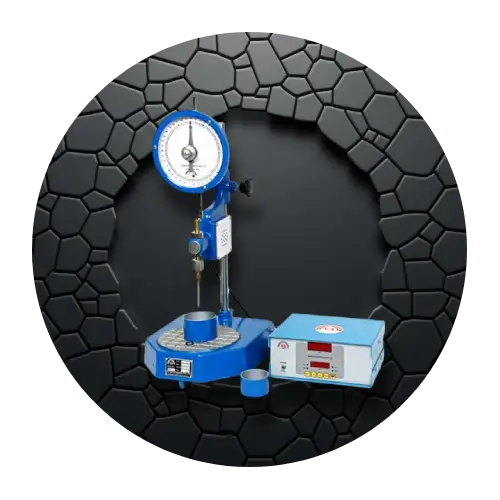
Vicat Apparatus
The Vicat Apparatus is a tool that helps us find out a few things about cement. It tells us the consistency of cement. It also tells us when the cement starts to set and when it is completely set.
The Vicat Apparatus is used in these places:
- Cement manufacturing plants
- Construction laboratories
- Research institutions
The Vicat Apparatus is very useful for cement testing. We use the Vicat Apparatus to test cement and make sure it is good. The Vicat Apparatus is a tool, for people who work with cement.
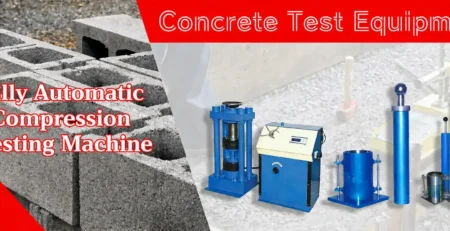
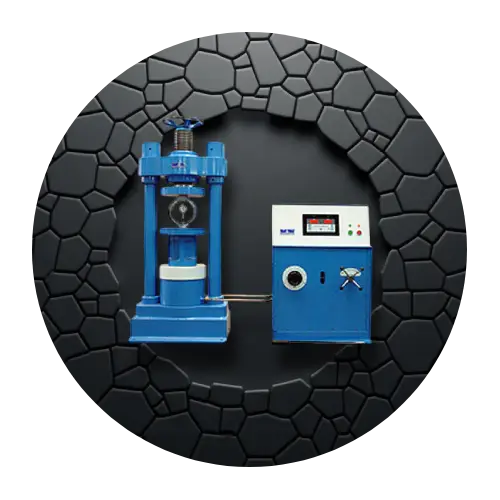
Compression Testing Machine (CTM)
Used to determine the compressive strength of cement mortar cubes.
Suitable for:
- Cement quality testing
- Construction laboratories
- Educational institutions
1 Le Chatelier Apparatus
Measures the soundness of cement by determining expansion caused by free lime.
2 Blaine Air Permeability Apparatus
Determines the fineness of cement by measuring its specific surface area.
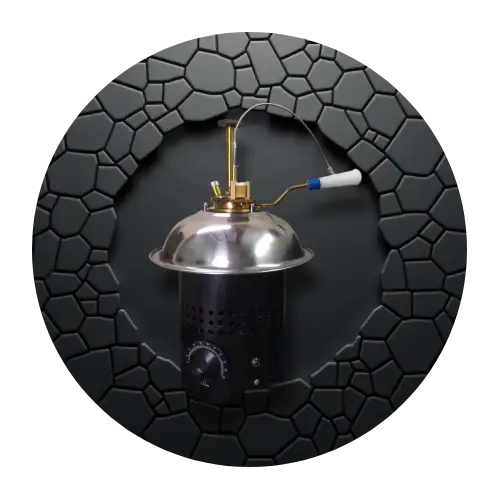
3 Cement Autoclave
Used to determine the soundness of cement under accelerated conditions.
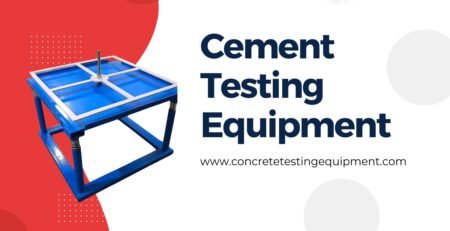
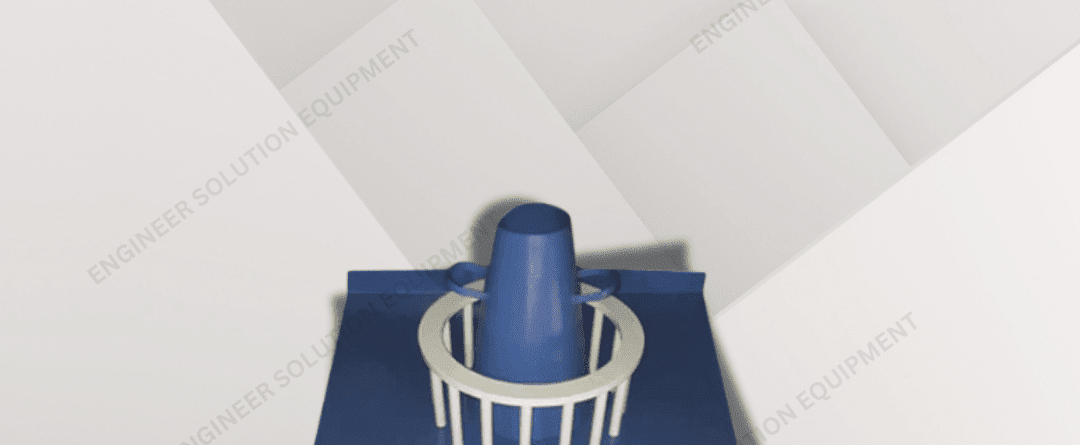
4 Flow Table Apparatus
Measures the workability and consistency of cement mortar.
5 Specific Gravity Bottle
Used for determining the specific gravity of cement.
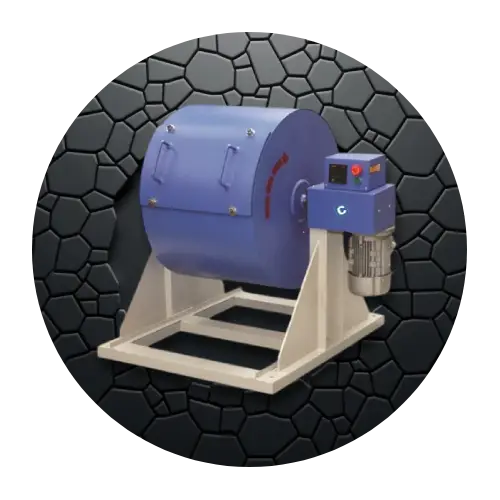
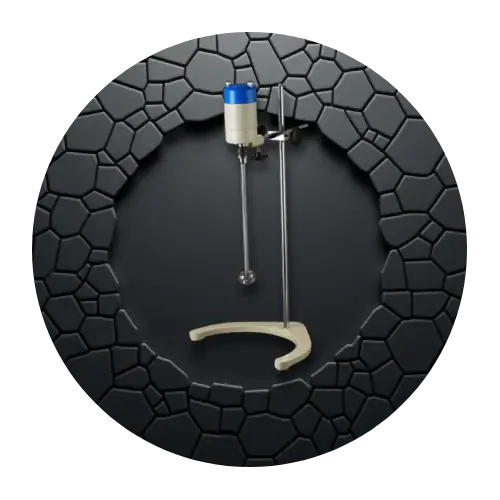
6 Mortar Mixer
Ensures uniform mixing of cement mortar samples before testing.
7 Cube Moulds
Used to prepare standard cement mortar specimens for compressive strength testing.
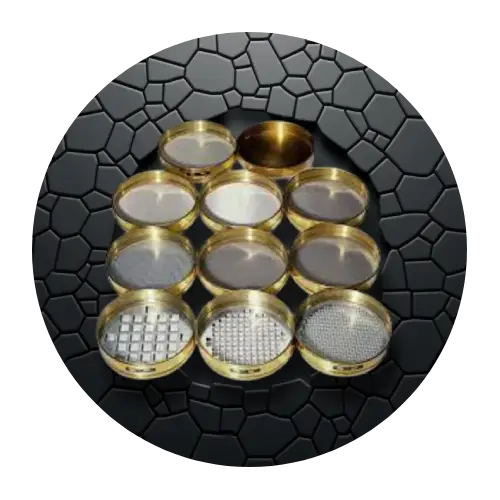
8 Laboratory Sieves
Used for cement fineness analysis.
Features of Engineering Solutions Equipment Cement Testing Equipment
1 High Accuracy
Precision-engineered instruments provide reliable and repeatable results.
2 Durable Construction
Manufactured using premium-quality materials for long service life.
3 User-Friendly Design
Simple operation allows efficient testing by laboratory personnel.
4 Standards Compliance
Designed according to applicable IS, ASTM, and international testing standards where required.
5 Corrosion Resistance
Suitable for long-term laboratory use.
6 Low Maintenance
Built for reliable operation with minimal servicing.
7 Wide Product Range
Comprehensive testing solutions for cement quality evaluation.
Benefits of Using Quality Cement Testing Equipment
1 Better Construction Quality
Accurate testing ensures the use of high-quality cement.
2 Improved Structural Performance
Reliable test results support stronger and more durable structures.
3 Reduced Construction Risks
Early detection of quality issues prevents structural failures.
4 Cost Savings
Minimises future maintenance and repair expenses.
5 Regulatory Compliance
Supports quality certification and project approvals.
6 Reliable Laboratory Performance
High-quality instruments improve testing efficiency and accuracy.
7 Enhanced Customer Confidence
Quality-controlled construction strengthens business reputation.
Applications of Cement Testing Equipment
1 Cement Manufacturing Plants
Ensures product quality before market distribution.
2 Construction Companies
Verifies cement quality before use in projects.
3 Civil Engineering Laboratories
Performs routine testing for quality assurance.
4 Infrastructure Projects
Supports quality control in:
- Highways
- Bridges
- Metro projects
- Airports
- Industrial plants
5 Educational Institutions
Used in engineering colleges for practical laboratory training.
6 Government Departments
Supports compliance testing and quality inspections.
7 Research & Development Laboratories
Facilitates studies on cement properties and construction materials.
8 Third-Party Testing Laboratories
Provides independent quality verification for construction projects.
Technical Specifications
Typical features include:
- Laboratory-grade precision
- Manual and digital models
- Heavy-duty steel construction
- Corrosion-resistant finishes
- Standard calibration compatibility
- Durable testing accessories
- Portable equipment options (selected models)
- High measurement accuracy
Specifications vary according to the equipment model.
Why Choose Engineering Solutions Equipment?
Engineering Solutions Equipment has become a trusted name in civil engineering and material testing solutions.
1 Years of Industry Experience
Extensive expertise in manufacturing laboratory testing instruments.
2 Premium Product Quality
High-quality equipment built using advanced engineering techniques.
3 Comprehensive Product Portfolio
Offers testing equipment for cement, concrete, soil, aggregates, bitumen, and other construction materials.
4 Technical Guidance
Experienced professionals help customers select the right testing equipment.
Competitive Pricing
Affordable solutions for laboratories and construction companies.
1 Timely Delivery
Reliable supply network serving customers across India.
2 Strong After-Sales Support
Installation guidance, technical assistance, and maintenance support.
Industries Served
Engineering Solutions Equipment supplies Cement Testing Equipment to:
- Cement Manufacturers
- Construction Companies
- Infrastructure Developers
- Civil Engineering Consultants
- Government Departments
- Engineering Colleges
- Research Laboratories
- Quality Control Laboratories
- Third-Party Inspection Agencies
- Industrial Construction Companies
- Ready-Mix Concrete Plants
- Testing Institutions
Tips for Selecting the Right Cement Testing Equipment
Before purchasing, consider:
- Required testing parameters
- Laboratory capacity
- Applicable testing standards
- Accuracy requirements
- Automation level
- Ease of calibration
- Maintenance needs
- Budget
- Future expansion plans
- Availability of accessories
Maintenance Tips
To maximise equipment performance:
- Clean equipment after each use.
- Store instruments in dry conditions.
- Calibrate equipment regularly.
- Lubricate moving components where applicable.
- Replace worn accessories promptly.
- Maintain calibration records.
- Inspect measuring components periodically.
- Follow manufacturer maintenance guidelines.
Routine maintenance ensures accurate and consistent test results.
Latest Trends in Cement Testing Technology
Modern laboratories are adopting advanced testing technologies.
Current innovations include:
- Digital cement testing instruments
- Automated testing systems
- Computerised data acquisition
- Wireless monitoring
- Smart laboratory management software
- AI-assisted quality analysis
- Cloud-based reporting
- Industry 4.0 integration
Engineering Solutions Equipment continues to embrace modern technologies to support evolving testing requirements.
Why Professionals Trust Engineering Solutions Equipment
Customers choose Engineering Solutions Equipment because of:
- High-quality laboratory equipment
- Precision engineering
- Accurate testing performance
- Comprehensive product range
- Competitive pricing
- Prompt delivery
- Excellent technical support
- Commitment to quality
These strengths have established the company as a preferred supplier for construction material testing solutions.
Future of Cement Testing Equipment
With rapid infrastructure development and stricter quality standards, cement testing technology continues to advance.
Future developments include:
- AI-enabled testing systems
- Fully automated laboratories
- IoT-connected testing equipment
- Remote monitoring capabilities
- Digital calibration management
- Sustainable laboratory technologies
- Real-time reporting platforms
- Smart quality control systems
These innovations will improve testing efficiency, reliability, and construction quality.
Conclusion
Cement testing is an important step when it comes to making sure that every construction project is good quality, strong and lasts a long time. Doing tests helps engineers and contractors make good decisions follow the rules of the industry and build safe structures that will last.
Engineering Solutions Equipment is a company that people trust to make and supply Cement Testing Equipment. They offer good laboratory instruments to construction companies, people who make cement, schools, research laboratories and quality control departments. The company has products that are made with precision prices that’re fair experts who know what they are doing and customer support that you can count on. This means they can give you everything you need to test cement, for construction projects.
If you need a Vicat Apparatus, a Compression Testing Machine, a Blaine Air Permeability Apparatus, a Le Chatelier Apparatus, a Mortar Mixer or a complete cement testing laboratory Engineering Solutions Equipment has the equipment you need. They will give you equipment that you can rely on to get results and make sure the construction is of good quality. Engineering Solutions Equipment is a company that can help you with all your Cement Testing Equipment needs. They will make sure you get the right tools to do the job. Cement testing is what they specialize in. They have the Cement Testing Equipment to help you get it done.
Frequently Asked Questions (FAQs)
1. What is cement testing equipment used for?
Cement testing equipment is used to evaluate the physical and mechanical properties of cement, including fineness, consistency, setting time, soundness, compressive strength, and specific gravity.
2. Which industries use cement testing equipment?
Construction companies, cement manufacturers, civil engineering laboratories, research institutions, educational colleges, infrastructure developers, and government quality control departments use cement testing equipment.
3. What are the common cement tests?
Common tests include the Vicat consistency test, setting time test, compressive strength test, soundness test, fineness test, Blaine air permeability test, and specific gravity test.
4. Why is cement testing important?
Cement testing ensures material quality, improves structural safety, supports compliance with engineering standards, reduces construction risks, and increases the durability of buildings and infrastructure.
5. Why choose Engineering Solutions Equipment?
Engineering Solutions Equipment offers precision-engineered cement testing instruments, reliable performance, competitive pricing, technical expertise, timely delivery, and dependable after-sales support for laboratories and construction professionals.